A Dental Website Designed Around Patient Decisions
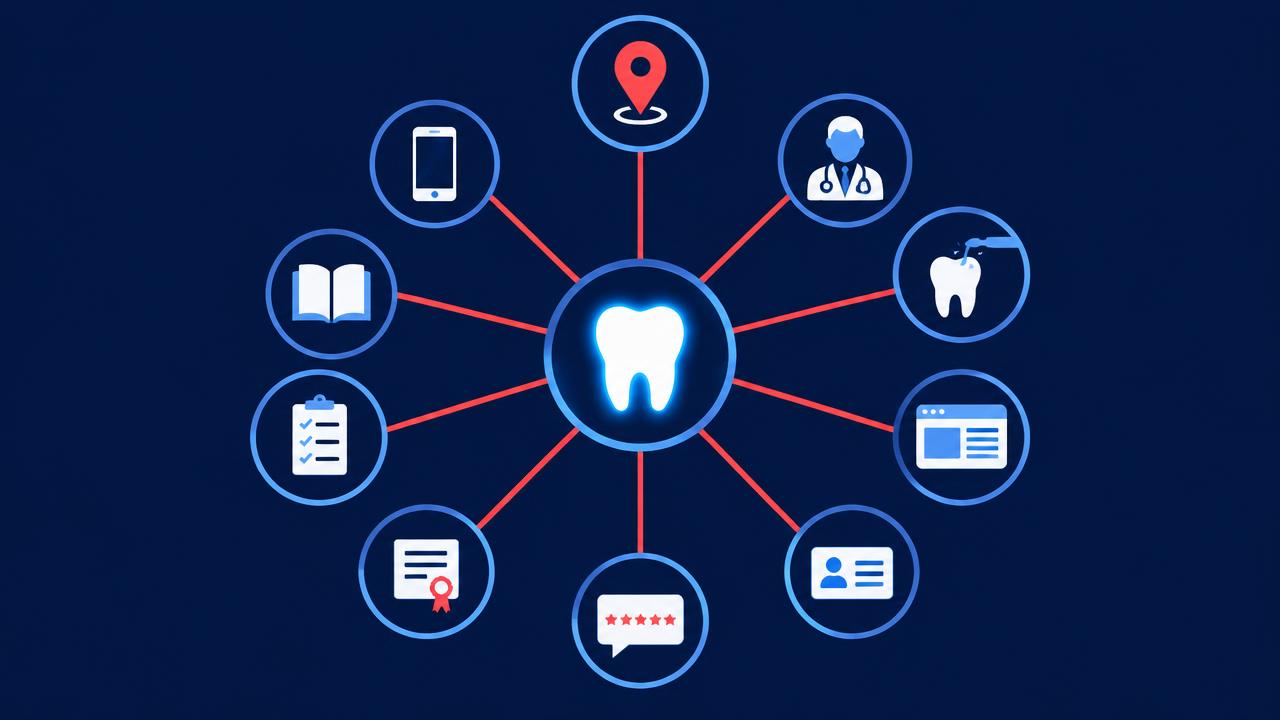
Practice identity, treatment navigation, provider trust, reviews, location and a clear next step should be visible on every screen size.
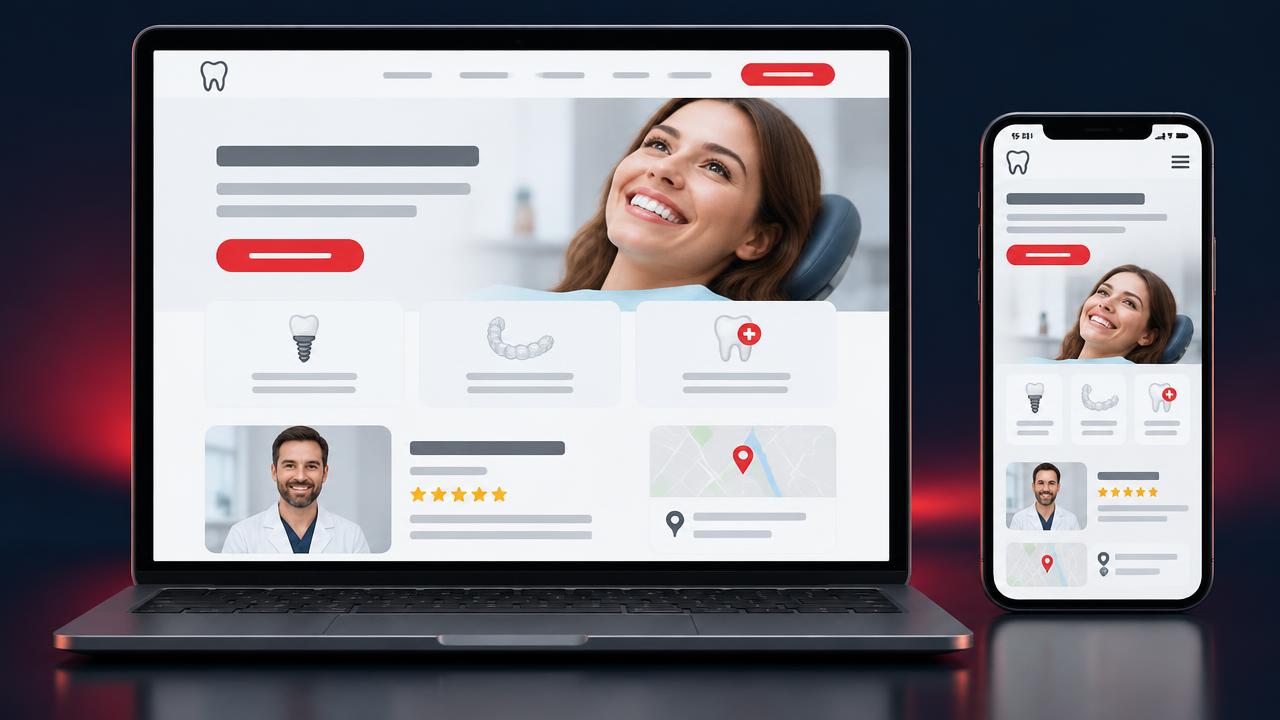

Your website should do more than look professional. Xcare builds dental website experiences around how patients search, evaluate practices, explore treatments and take the next step toward becoming a patient.
Practice identity, treatment navigation, provider trust, reviews, location and a clear next step should be visible on every screen size.
A good dental website helps prospective patients quickly understand who the practice serves, what treatments it provides, where it is located, why patients should trust it and how to take the next step. Effective dental website design combines patient experience, search visibility, mobile performance, treatment content, credibility and conversion.
Key takeaway: Design matters, but a dental website should ultimately connect patient intent with useful information and a clear path to contact or book the practice.
Nearly every digital patient-acquisition channel eventually depends on the website to help a prospective patient evaluate the practice. The website should therefore be treated as part of the practice's growth infrastructure, not simply as an online brochure.
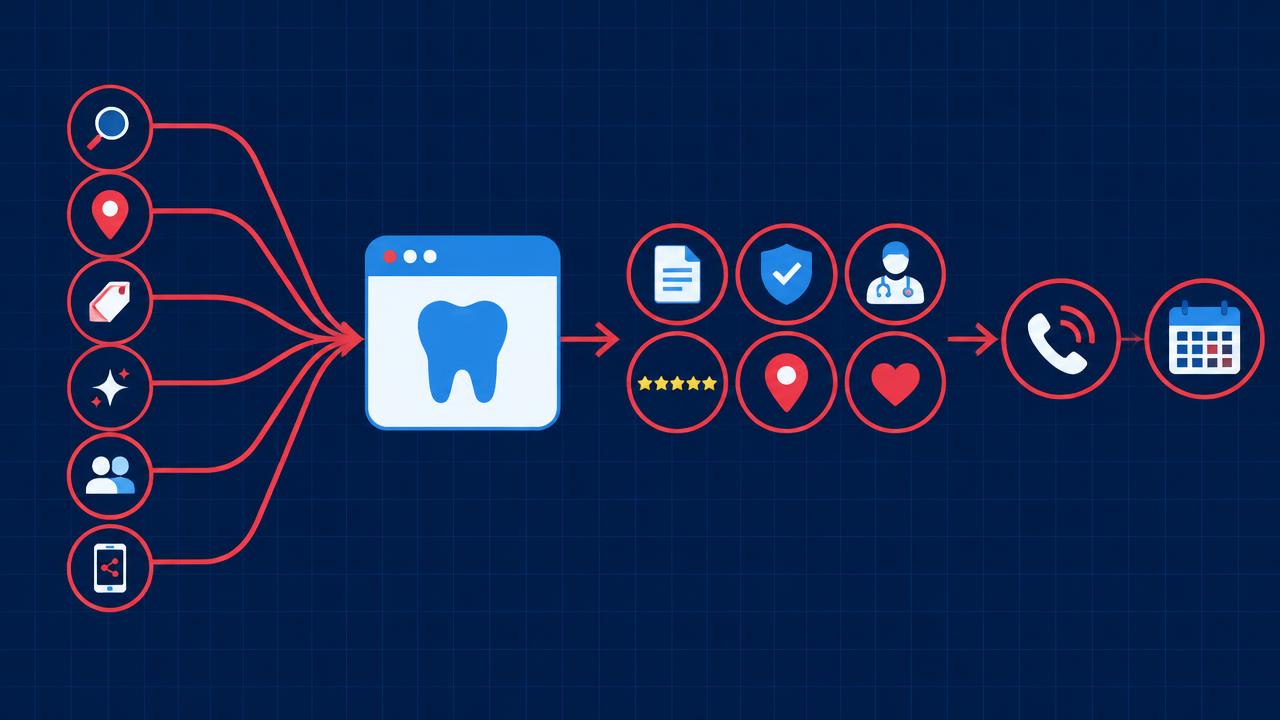
Patients arrive with different intent: looking for a dentist, a specific treatment, comparing practices, researching a provider, checking reviews, finding location and hours, or seeking urgent care. Website architecture should make each of those journeys easy.
Clarity, trust and an obvious next step separate a website that converts from one that simply exists.
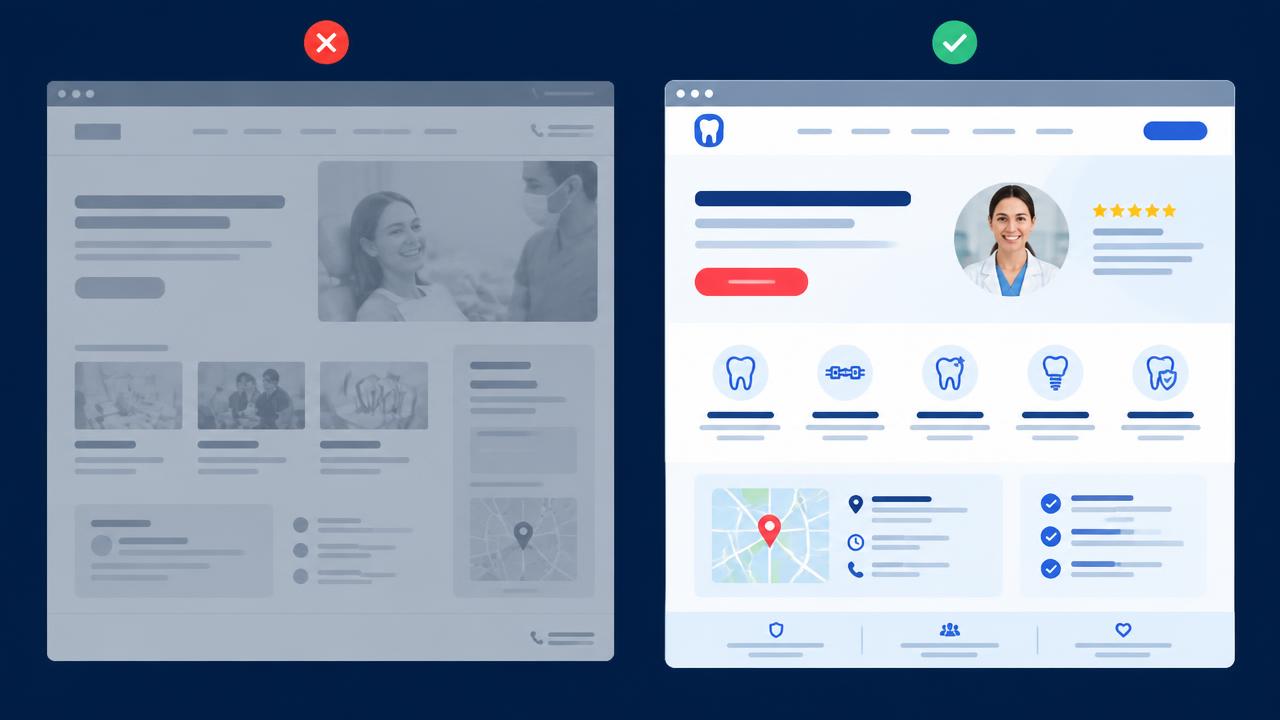
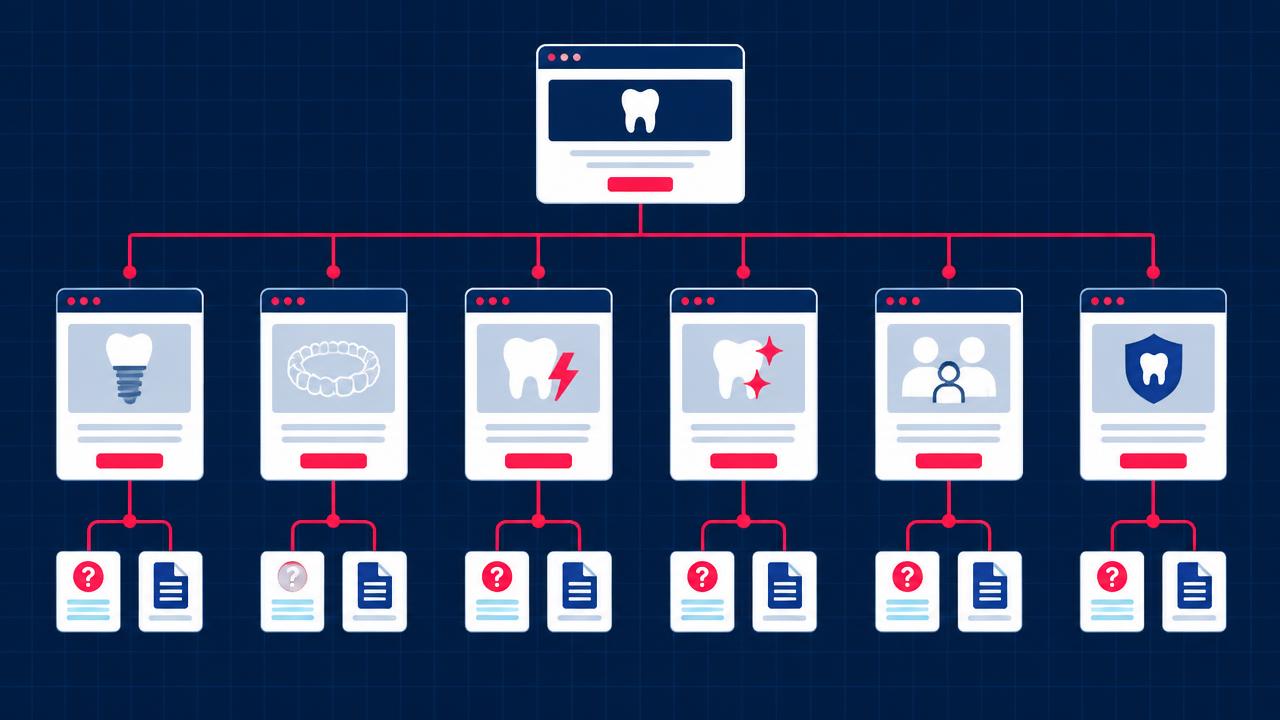
A connected approach combines a technical foundation, clear architecture, treatment relevance, fast mobile UX, internal linking, patient-focused content and conversion pathways.
Website information supports local search when it reinforces the same practice details shown on your Google Business Profile. The website doesn't control Maps rankings on its own, but consistent, relevant information helps.
Clear website structure helps search engines and AI-driven systems understand what a practice is, where it operates, who provides care and what services it offers. No one can guarantee AI recommendations or citations; clarity simply makes accurate understanding more likely.
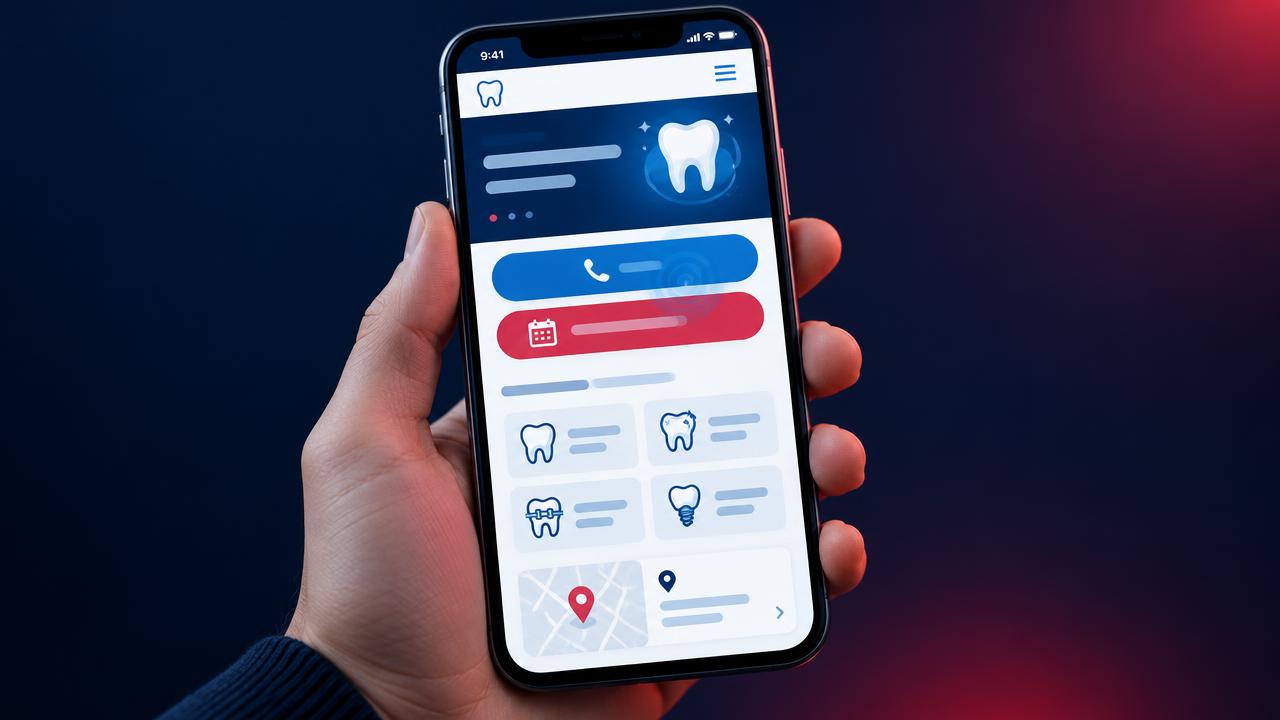
Conversion design should reduce unnecessary friction: visible phone and contact details, an appointment request, treatment-specific calls to action, location, provider credibility, reviews where appropriate, simple forms and mobile usability.
Fast pages, optimized images and stable layouts that don't shift as they load.
Layouts that adapt to every screen, served over secure browsing.
Clean code and technical SEO so pages are easy to crawl and maintain.
Readable typography, clear contrast and logical headings.
Keyboard navigation, labelled form fields and descriptive image text.
Accessibility should be considered throughout design and development, not added at the end.
Xcare approaches the website as one component of a connected patient growth ecosystem. The goal is not simply launching a better-looking website; it is creating stronger infrastructure for how patients discover, evaluate and engage with the practice.
Search, Maps, ads and AI-driven discovery.
Website, treatments, providers and reputation.
Calls and requests that become appointments.
The relationship continues after the first visit.
Dental is Xcare's primary growth vertical, but patient-based healthcare practices face many of the same digital challenges. Prospective patients need to understand the provider, services, location, expertise and next step quickly.
Whether someone is searching for a dentist, physiotherapist, chiropractor, optometrist or another healthcare provider, effective healthcare website design should connect patient intent with clear information, trust and an easy path to care.
One that quickly shows patients what the practice offers, where it is, why to trust it and how to book, and that works well on mobile and in search.
It depends on scope: the number of pages and treatments, content, functionality, integrations, design and growth requirements. An assessment is the best way to define what your practice needs.
When it no longer serves the practice: slow performance, outdated technology or branding, poor usability, or a mismatch with current services and growth goals.
Yes. Architecture, treatment pages, internal linking and technical health shape search visibility, so SEO should be part of the design from the start.
Typically a homepage, treatment pages, provider and team information, location and contact details, new-patient information, reviews and helpful patient resources.
Important treatments patients search for usually should. Each page should be genuinely useful and distinct rather than a thin keyword page.
Very important. Many patients look up a practice, call or request an appointment from a phone, so mobile speed and usability directly affect the experience.
It can support it. Consistent practice information and relevant treatment and location content reinforce your Google Business Profile, though the website alone doesn't control Maps rankings.
Ads send patients to pages. Relevant, fast landing pages with a clear next step reduce friction and help turn paid clicks into patient opportunities.
By making practice information clear and structured: who you are, where you practice, who provides care, which treatments you offer and what patients say. Inclusion is never guaranteed.
It depends on your scheduling workflow and practice management system. Where booking can be integrated reliably, it can reduce friction; otherwise a clear request form and tap-to-call work well.
A basic website presents the practice. A marketing-focused website is built to be found, to earn trust and to convert visitors into calls and appointment requests.
Xcare can assess your current website across search visibility, patient experience, treatment content, mobile performance and conversion, and recommend or deliver the improvements your practice needs.
See where your website can improve across search visibility, patient trust, treatment discovery, mobile experience and conversion.