
Dental SEO & Search Visibility

Dental SEO That Turns Search Visibility Into Patient Opportunities

Xcare helps dental practices build search visibility around the treatments, locations and questions prospective patients are actively searching for—while connecting SEO to the broader patient journey.

What Is Dental SEO?

Dental SEO is the process of improving a dental practice's visibility in search engines when prospective patients search for dentists, treatments or dental information. It combines website optimization, treatment content, local search signals, technical SEO, authority and user experience to help the right patients discover a practice.

Key takeaway: Effective dental SEO should do more than increase rankings and traffic. It should connect search visibility with relevant patient intent and make it easier for prospective patients to understand, trust and contact the practice.

Dental SEO Starts With Understanding Patient Search Intent

Patients search with different goals. Different search intents require different page types and patient journeys, so a practice needs the right page for each one.
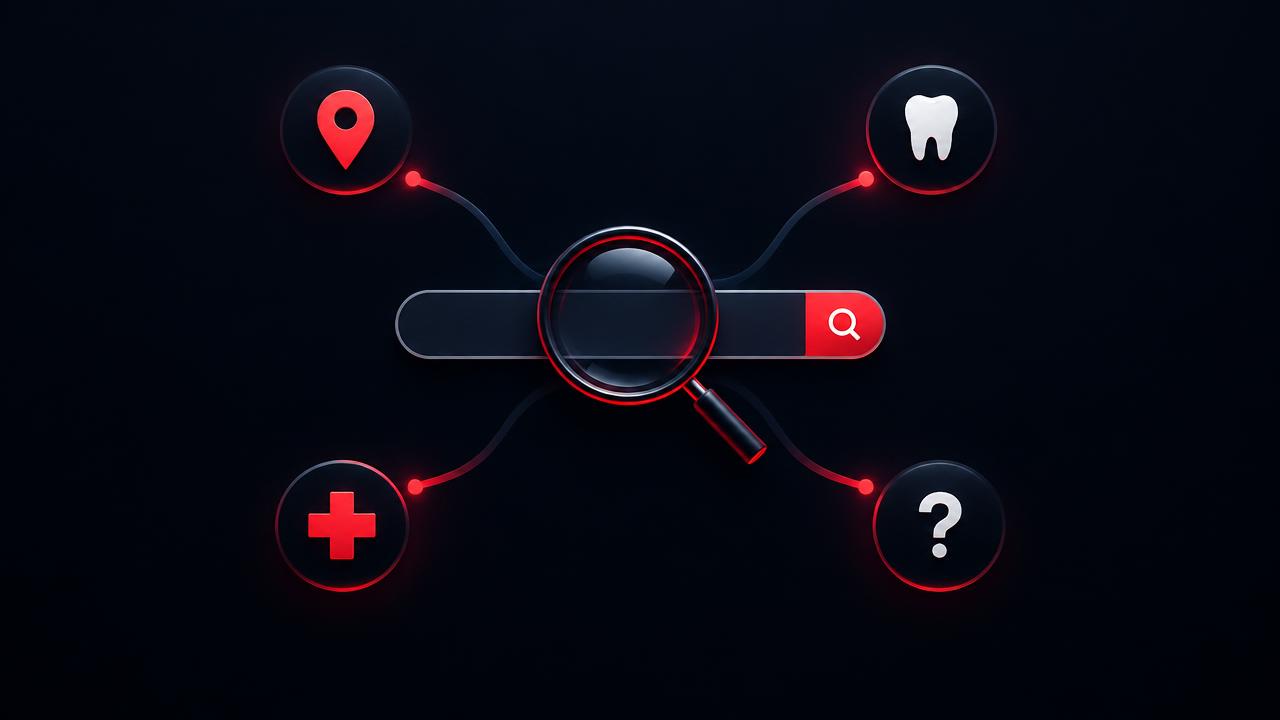
A search bar branching into the four types of patient search intent: provider, treatment, urgent and informational.

Provider intent

The patient is choosing a practice.

  • "dentist near me"
  • "family dentist [city]"

Treatment intent

The patient knows the treatment and is looking for a provider who offers it.

  • "dental implants [city]"
  • "Invisalign dentist [city]"
  • "root canal dentist near me"

Urgent intent

The patient needs care quickly.

  • "emergency dentist near me"
  • "same day dentist"

Informational intent

The patient is researching before deciding.

  • "how long do dental implants last?"
  • "how much does Invisalign cost?"

How Does Dental SEO Work?

Strong dental SEO aligns what prospective patients search for with clear, useful pages that demonstrate treatment relevance, location, expertise and trust.

  1. 01

    Patient search

  2. 02

    Relevant search result

  3. 03

    Treatment or location page

  4. 04

    Practice trust

  5. 05

    Call / booking request

  6. 06

    Patient opportunity

The Foundations of Dental SEO

Technical SEO

Ensure search engines can efficiently crawl, understand and index the website.

  • Site architecture
  • Page performance
  • Mobile experience
  • Indexability
  • Canonical URLs
  • Structured data

Treatment & service pages

Build useful pages around actual services and patient intent rather than thin keyword pages.

  • Dental implants
  • Invisalign
  • Emergency dentistry
  • Cosmetic dentistry
  • Family dentistry

Local SEO

Strengthen geographic relevance for patients searching within the practice's service area.

  • Google Business Profile
  • Location signals
  • Reviews
  • Local relevance
  • Practice information consistency

Content & topical authority

Create useful supporting information that answers patient questions and demonstrates subject depth.

Internal linking

Connect treatments, supporting resources, locations and related topics so users and search engines can understand their relationships.

Authority & trust

Strengthen credibility through real expertise, reputation, useful information and legitimate third-party authority.

Dental SEO and Local Search Work Together

Dental searches frequently carry strong geographic intent. Patients usually want a practice they can reach, so location shapes which results they see.

  • "dentist near me"
  • "emergency dentist near me"
  • "dentist in [city]"
  • "dental implants [city]"
A dental practice highlighted on a local map with its business profile and patient reviews.

Your Dental Website Architecture Affects Search Visibility

SEO should influence how a dental website is structured. Clear relationships between pages help both prospective patients and search systems understand the practice.

A dental website's page structure: homepage connected to treatment pages and supporting patient resources.

Treatment structure

Homepage → Treatment categories → Individual treatment pages → Supporting patient resources

Practice structure

Practice → Location → Providers → Services

Dental SEO Requires More Than Blog Posts

Commercial pages help patients choose and contact a practice; informational content answers their questions. Supporting content should strengthen relevant commercial pages rather than compete with them for the same intent.

Commercial content

  • Treatment pages
  • Service pages
  • Location information
  • Provider information
  • Patient acquisition pages

Informational content

  • Treatment questions
  • Cost guides
  • Comparisons
  • Procedure information
  • Patient education
  • FAQs

Dental SEO Should Produce Patients — Not Just Rankings

Rankings and traffic are useful indicators, but they are not the final business outcome. Xcare approaches dental SEO as part of a broader patient acquisition and growth system.

Traditional SEO reporting

  • Keyword rankings
  • Organic traffic
  • Impressions
  • Clicks
  • Backlinks

Xcare growth view

  • Search visibility
  • Patient search intent
  • Website engagement
  • Calls / requests
  • Patient opportunities
  • Practice growth intelligence

What Does Xcare Dental SEO Focus On?

  • Treatment visibility
  • Local search visibility
  • Search intent
  • Website architecture
  • Technical performance
  • Content quality
  • Practice authority
  • Patient conversion pathways
  • AI readability
  • Measurement

SEO for Different Types of Dental Practices

Search strategy varies by treatment mix, competition, geography and practice objectives.

  • General dentistry
  • Cosmetic dentistry
  • Orthodontics
  • Dental implants
  • Emergency dentistry
  • Multi-location dental groups
Questions

Dental SEO FAQs

What is dental SEO?

Dental SEO is the work of making a dental practice easier to find in search when patients look for dentists, treatments or dental information. It covers the website, treatment content, local signals, technical health and authority.

Does SEO work for dentists?

Yes, SEO can work well for dentists because patients actively search for providers and treatments near them. Results depend on local competition, content quality, technical health and reputation.

How long does dental SEO take?

It varies; SEO builds over time rather than overnight. Timing depends on your starting point, the competitiveness of your market and treatments, and how consistently the work is done, so no one can honestly promise a fixed timeline.

How much does dental SEO cost?

Cost depends on scope: the number of treatments and locations, the state of your current website, and how competitive your market is. Compare proposals on what work is included and how outcomes will be measured, not only on price.

What is local SEO for dentists?

Local SEO for dentists improves visibility in location-based searches and Google Maps. It relies on an accurate Google Business Profile, consistent practice information, location-relevant content and reviews.

How can a dentist rank higher on Google?

Build clear, useful pages for each important treatment and location, keep the site technically sound and fast, maintain an accurate Google Business Profile and earn genuine reviews. Rankings are never guaranteed, but these foundations improve relevance and trust.

Is Google Business Profile important for dental SEO?

Yes, it is one of the most important local signals. It influences how a practice appears in Maps and local results, so its information, categories, photos and reviews should be accurate and current.

Should every dental treatment have its own page?

Important treatments that patients search for usually deserve their own page. Each page should be genuinely useful and distinct; thin, near-duplicate pages created only for keywords tend to help no one.

What is the difference between dental SEO and Google Ads?

SEO earns organic visibility that builds over time, while Google Ads buys placement that can capture demand immediately. Many practices use both to cover more of the patient search journey.

Can dental SEO help with AI search visibility?

It can help, but it cannot guarantee inclusion. Clear site structure, authoritative content, structured data and consistent practice information make it easier for search and AI systems to understand what a practice offers.

How should a dental practice measure SEO performance?

Measure beyond rankings and traffic. Track calls, booking requests and patient opportunities from organic search where your data allows, alongside visibility for the treatments and locations that matter most.

What should I look for in a dental SEO company?

Look for transparency about the work, realistic expectations and reporting tied to patient outcomes. Be cautious of anyone guaranteeing rankings or timelines, and ask how they handle technical SEO, content, local search and measurement.

See How Visible Your Dental Practice Really Is

Identify opportunities across search visibility, treatment content, local SEO, website structure and patient acquisition.